This article is from page 20 of the 2006-07-04 edition of The Clare People. OCR mistakes are to be expected so download the original SWF or the rendered page 20 JPG
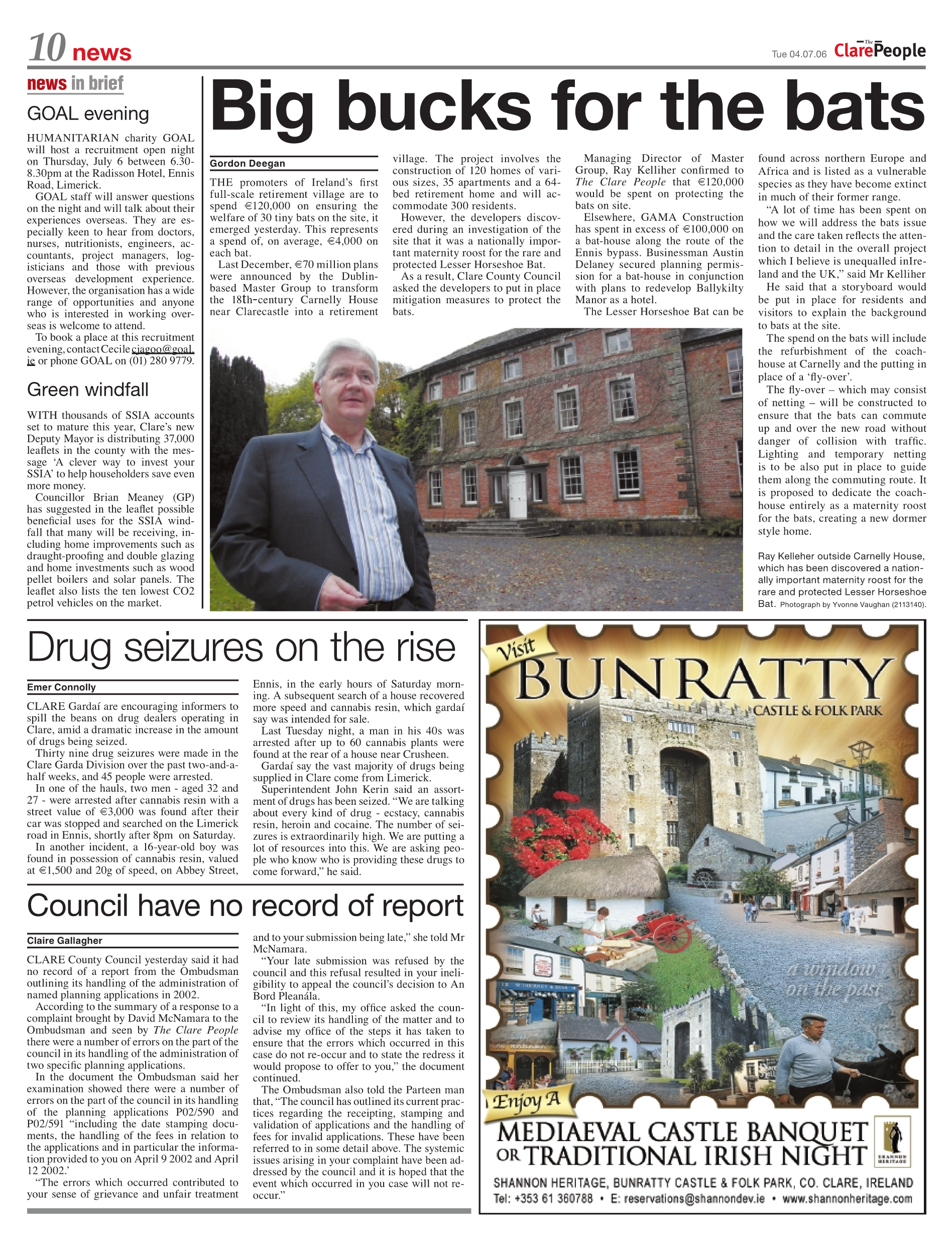
THE promoters of Ireland’s first full-scale retirement village are to spend €120,000 on ensuring the welfare of 30 tiny bats on the site, it emerged yesterday. This represents a spend of, on average, €4,000 on each bat.
Last December, €70 million plans were announced by the Dublinbased Master Group to transform the 18 century Carnelly House near Clarecastle into a retirement village. The project involves the construction of 120 homes of various sizes, 35 apartments and a 64bed retirement home and will accommodate 300 residents.
However, the developers discovered during an investigation of the site that it was a nationally important maternity roost for the rare and protected Lesser Horseshoe Bat.
As a result, Clare County Council asked the developers to put in place mitigation measures to protect the bats.
Managing Director of Master Group, Ray Kelliher confirmed to The Clare People that €120,000 would be spent on protecting the bats on site.
Elsewhere, GAMA Construction has spent in excess of €100,000 on a bat-house along the route of the Ennis bypass. Businessman Austin Delaney secured planning permission for a bat-house in conjunction with plans to redevelop Ballykilty Manor as a hotel.
The Lesser Horseshoe Bat can be found across northern Europe and Africa and is listed as a vulnerable species as they have become extinct in much of their former range.
“A lot of time has been spent on how we will address the bats issue and the care taken reflects the attention to detail in the overall project which I believe is unequalled inIreland and the UK,” said Mr Kelliher
He said that a storyboard would be put in place for residents and visitors to explain the background to bats at the site.
The spend on the bats will include the refurbishment of the coachhouse at Carnelly and the putting in place of a ‘fly-over’.
The fly-over – which may consist of netting – will be constructed to ensure that the bats can commute up and over the new road without danger of collision with traffic. Lighting and temporary netting is to be also put in place to guide them along the commuting route. It is proposed to dedicate the coachhouse entirely as a maternity roost for the bats, creating a new dormer style home.