This article is from page 9 of the 2006-01-10 edition of The Clare People. OCR mistakes are to be expected so download the original SWF or the rendered page 9 JPG
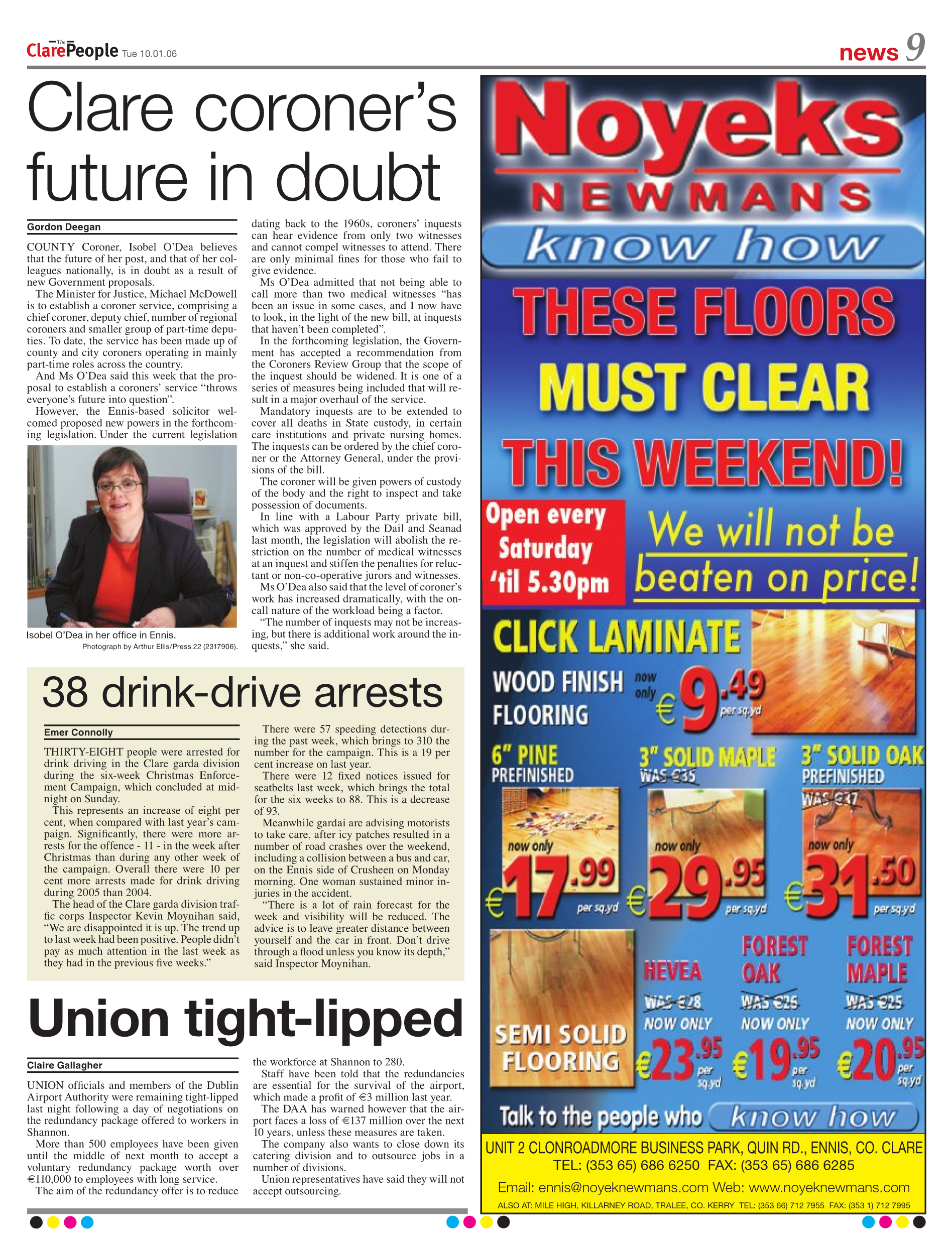
COUNTY Coroner, Isobel O’Dea believes that the future of her post, and that of her colleagues nationally, is in doubt as a result of new Government proposals.
The Minister for Justice, Michael McDowell is to establish a coroner service, comprising a chief coroner, deputy chief, number of regional coroners and smaller group of part-time deputies. To date, the service has been made up of county and city coroners operating in mainly part-time roles across the country.
And Ms O’Dea said this week that the proposal to establish a coroners’ service “throws everyone’s future into question”.
However, the Ennis-based solicitor welcomed proposed new powers in the forthcoming legislation. Under the current legislation dating back to the 1960s, coroners’ inquests can hear evidence from only two witnesses and cannot compel witnesses to attend. There are only minimal fines for those who fail to give evidence.
Ms O’Dea admitted that not being able to call more than two medical witnesses “has been an issue in some cases, and I now have to look, in the light of the new bill, at inquests that haven’t been completed”.
In the forthcoming legislation, the Government has accepted a recommendation from the Coroners Review Group that the scope of the inquest should be widened. It is one of a series of measures being included that will result in a major overhaul of the service.
Mandatory inquests are to be extended to cover all deaths in State custody, in certain care institutions and private nursing homes. The inquests can be ordered by the chief coroner or the Attorney General, under the provisions of the bill.
The coroner will be given powers of custody of the body and the right to inspect and take possession of documents.
In line with a Labour Party private bill, which was approved by the Dail and Seanad last month, the legislation will abolish the restriction on the number of medical witnesses at an inquest and stiffen the penalties for reluctant or non-co-operative jurors and witnesses.
Ms O’Dea also said that the level of coroner’s work has increased dramatically, with the oncall nature of the workload being a factor.
“The number of inquests may not be increasing, but there is additional work around the inquests,” she said.