This article is from page 15 of the 2006-02-14 edition of The Clare People. OCR mistakes are to be expected so download the original SWF or the rendered page 15 JPG
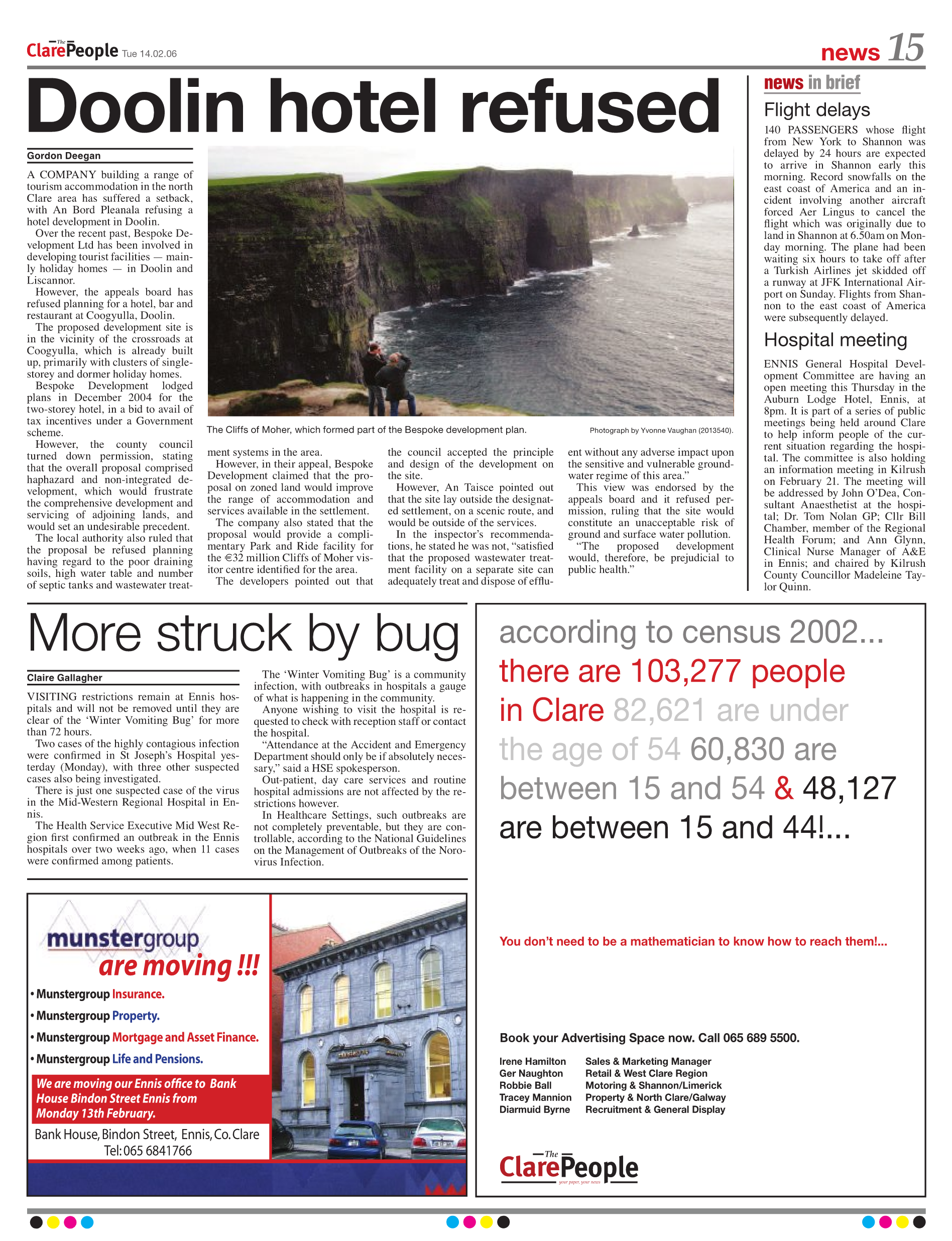
A COMPANY building a range of tourism accommodation in the north Clare area has suffered a setback, with An Bord Pleanala refusing a hotel development in Doolin.
Over the recent past, Bespoke Development Ltd has been involved in developing tourist facilities — mainly holiday homes — in Doolin and Liscannor.
However, the appeals board has refused planning for a hotel, bar and restaurant at Coogyulla, Doolin.
The proposed development site is in the vicinity of the crossroads at Coogyulla, which is already built up, primarily with clusters of singlestorey and dormer holiday homes.
Bespoke Development lodged plans in December 2004 for the two-storey hotel, in a bid to avail of tax incentives under a Government scheme.
However, the county council turned down permission, stating that the overall proposal comprised
haphazard and non-integrated de velopment, which would frustrate the comprehensive development and servicing of adjoining lands, and would set an undesirable precedent.
The local authority also ruled that the proposal be refused planning having regard to the poor draining soils, high water table and number of septic tanks and wastewater treatment systems in the area.
However, in their appeal, Bespoke Development claimed that the proposal on zoned land would improve the range of accommodation and services available in the settlement.
The company also stated that the proposal would provide a complimentary Park and Ride facility for the €32 million Cliffs of Moher visitor centre identified for the area.
The developers pointed out that the council accepted the principle and design of the development on the site.
However, An Taisce pointed out that the site lay outside the designated settlement, on a scenic route, and would be outside of the services.
In the inspector’s recommendations, he stated he was not, “satisfied that the proposed wastewater treatment facility on a separate site can adequately treat and dispose of effluent without any adverse impact upon the sensitive and vulnerable groundwater regime of this area.”
This view was endorsed by the appeals board and it refused permission, ruling that the site would constitute an unacceptable risk of ground and surface water pollution.
“The proposed development would, therefore, be prejudicial to public health.”