This article is from page 2 of the 2006-05-09 edition of The Clare People. OCR mistakes are to be expected so download the original SWF or the rendered page 2 JPG
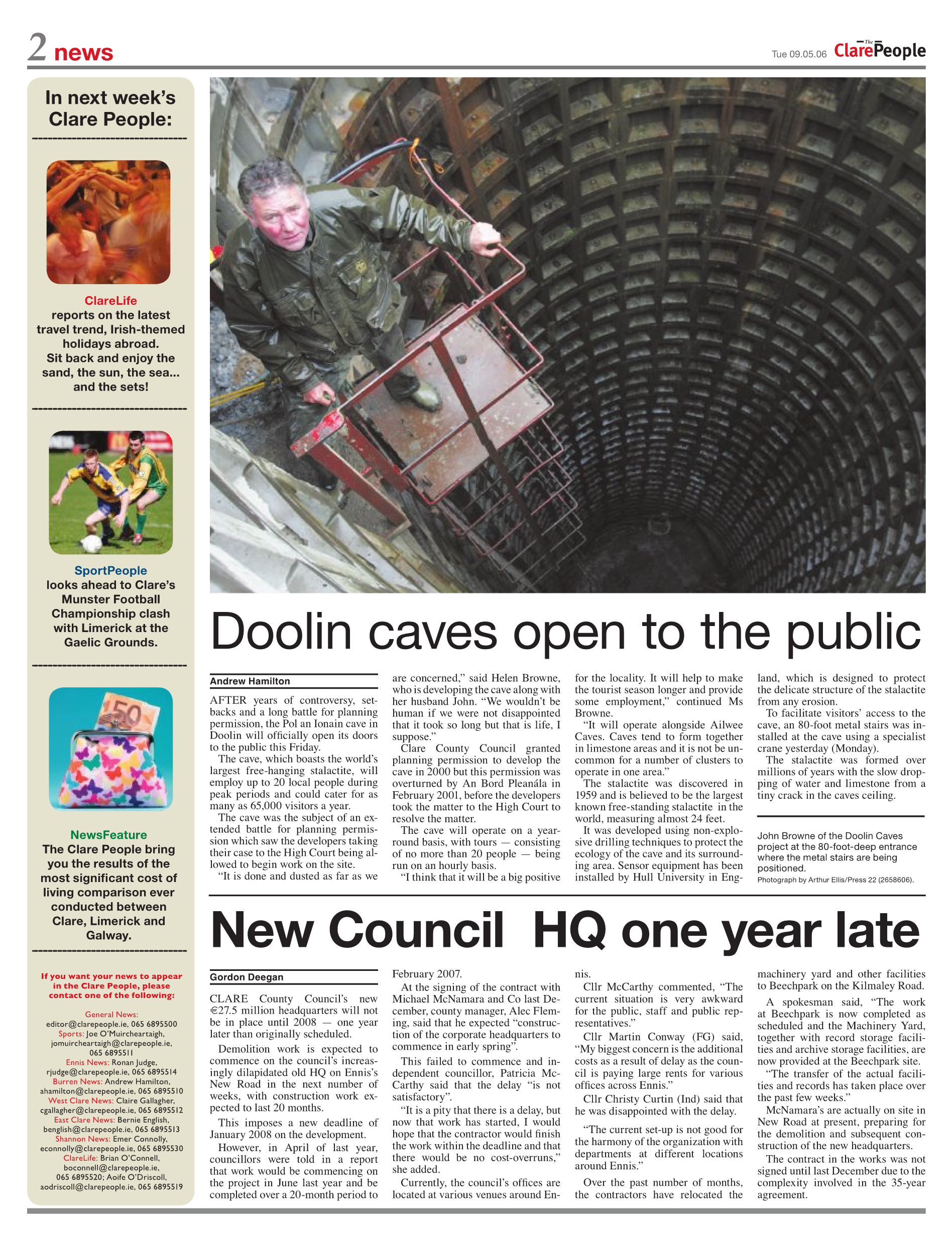
AFTER years of controversy, setbacks and a long battle for planning permission, the Pol an Ionain cave in Doolin will officially open its doors to the public this Friday.
The cave, which boasts the world’s largest free-hanging stalactite, will employ up to 20 local people during peak periods and could cater for as many as 65,000 visitors a year.
The cave was the subject of an extended battle for planning permission which saw the developers taking their case to the High Court being allowed to begin work on the site.
“It is done and dusted as far as we are concerned,” said Helen Browne, who is developing the cave along with her husband John. “We wouldn’t be human if we were not disappointed that it took so long but that is life, I suppose.”
Clare County Council granted planning permission to develop the cave in 2000 but this permission was overturned by An Bord Pleanála in February 2001, before the developers took the matter to the High Court to resolve the matter.
The cave will operate on a yearround basis, with tours — consisting of no more than 20 people — being run on an hourly basis.
“I think that it will be a big positive for the locality. It will help to make the tourist season longer and provide some employment,” continued Ms Browne.
“It will operate alongside Ailwee Caves. Caves tend to form together in limestone areas and it is not be uncommon for a number of clusters to operate in one area.”
The stalactite was discovered in 1959 and is believed to be the largest known free-standing stalactite in the world, measuring almost 24 feet.
It was developed using non-explosive drilling techniques to protect the ecology of the cave and its surrounding area. Sensor equipment has been installed by Hull University in England, which is designed to protect the delicate structure of the stalactite from any erosion.
To facilitate visitors’ access to the cave, an 80-foot metal stairs was installed at the cave using a specialist crane yesterday (Monday).
The stalactite was formed over millions of years with the slow dropping of water and limestone from a tiny crack in the caves ceiling.