This article is from page 11 of the 2006-07-10 edition of The Clare People. OCR mistakes are to be expected so download the original SWF or the rendered page 11 JPG
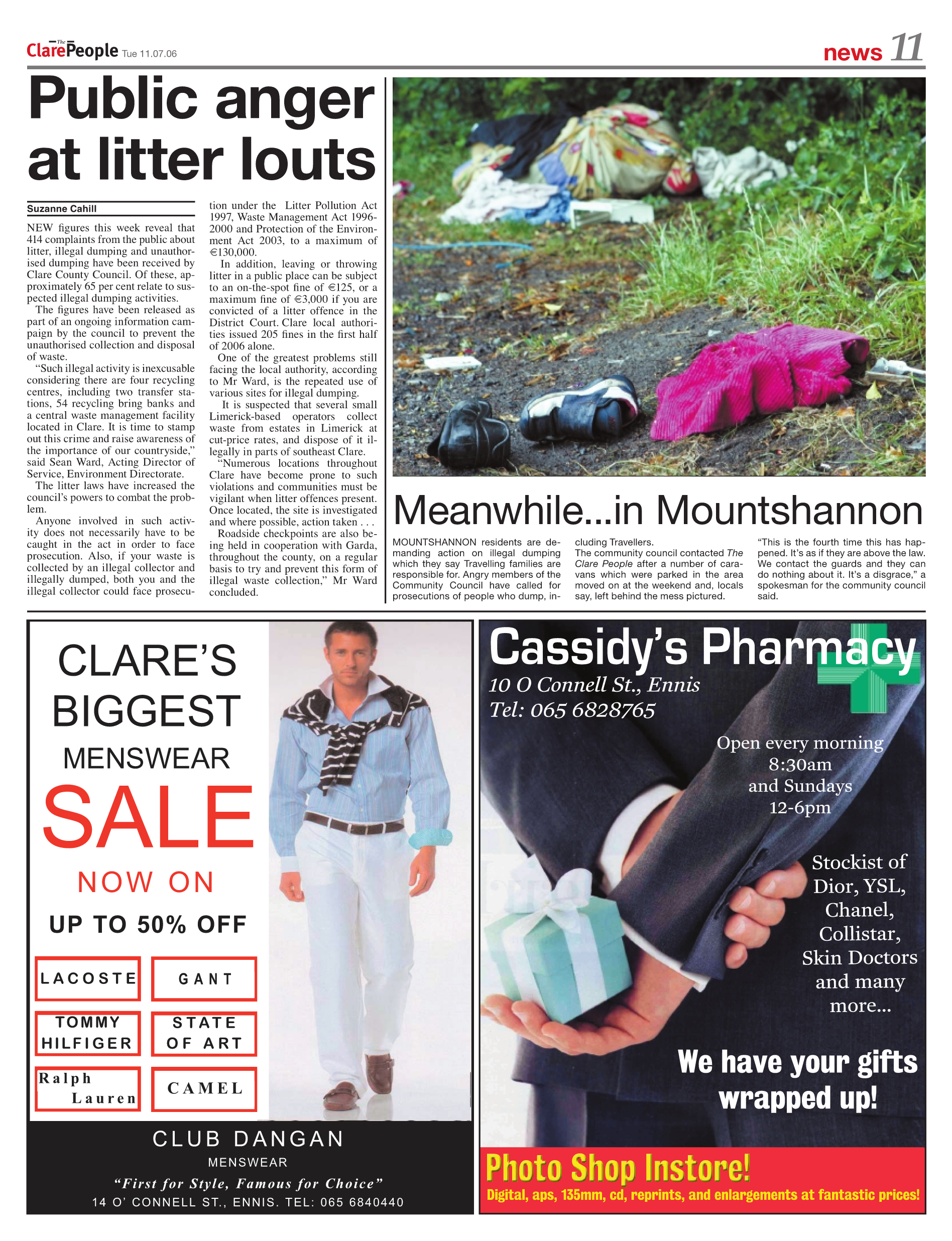
NEW figures this week reveal that 414 complaints from the public about litter, illegal dumping and unauthorised dumping have been received by Clare County Council. Of these, approximately 65 per cent relate to suspected illegal dumping activities.
The figures have been released as part of an ongoing information campaign by the council to prevent the unauthorised collection and disposal of waste.
“Such illegal activity is inexcusable considering there are four recycling centres, including two transfer stations, 54 recycling bring banks and a central waste management facility located in Clare. It is time to stamp out this crime and raise awareness of the importance of our countryside,” said Sean Ward, Acting Director of Service, Environment Directorate.
The litter laws have increased the council’s powers to combat the problem.
Anyone involved in such activity does not necessarily have to be caught in the act in order to face prosecution. Also, if your waste is collected by an illegal collector and illegally dumped, both you and the illegal collector could face prosecution under the Litter Pollution Act 1997, Waste Management Act 19962000 and Protection of the Environment Act 2003, to a maximum of €130,000.
In addition, leaving or throwing litter in a public place can be subject to an on-the-spot fine of €125, or a maximum fine of €3,000 if you are convicted of a litter offence in the District Court. Clare local authorities issued 205 fines in the first half of 2006 alone.
One of the greatest problems still facing the local authority, according to Mr Ward, is the repeated use of various sites for illegal dumping.
It is suspected that several small Limerick-based operators collect waste from estates in Limerick at cut-price rates, and dispose of it illegally in parts of southeast Clare.
“Numerous locations throughout Clare have become prone to such violations and communities must be vigilant when litter offences present. Once located, the site is investigated and where possible, action taken . . .
Roadside checkpoints are also being held in cooperation with Garda, throughout the county, on a regular basis to try and prevent this form of illegal waste collection,” Mr Ward concluded.