This article is from page 20 of the 2006-11-28 edition of The Clare People. OCR mistakes are to be expected so download the original SWF or the rendered page 20 JPG
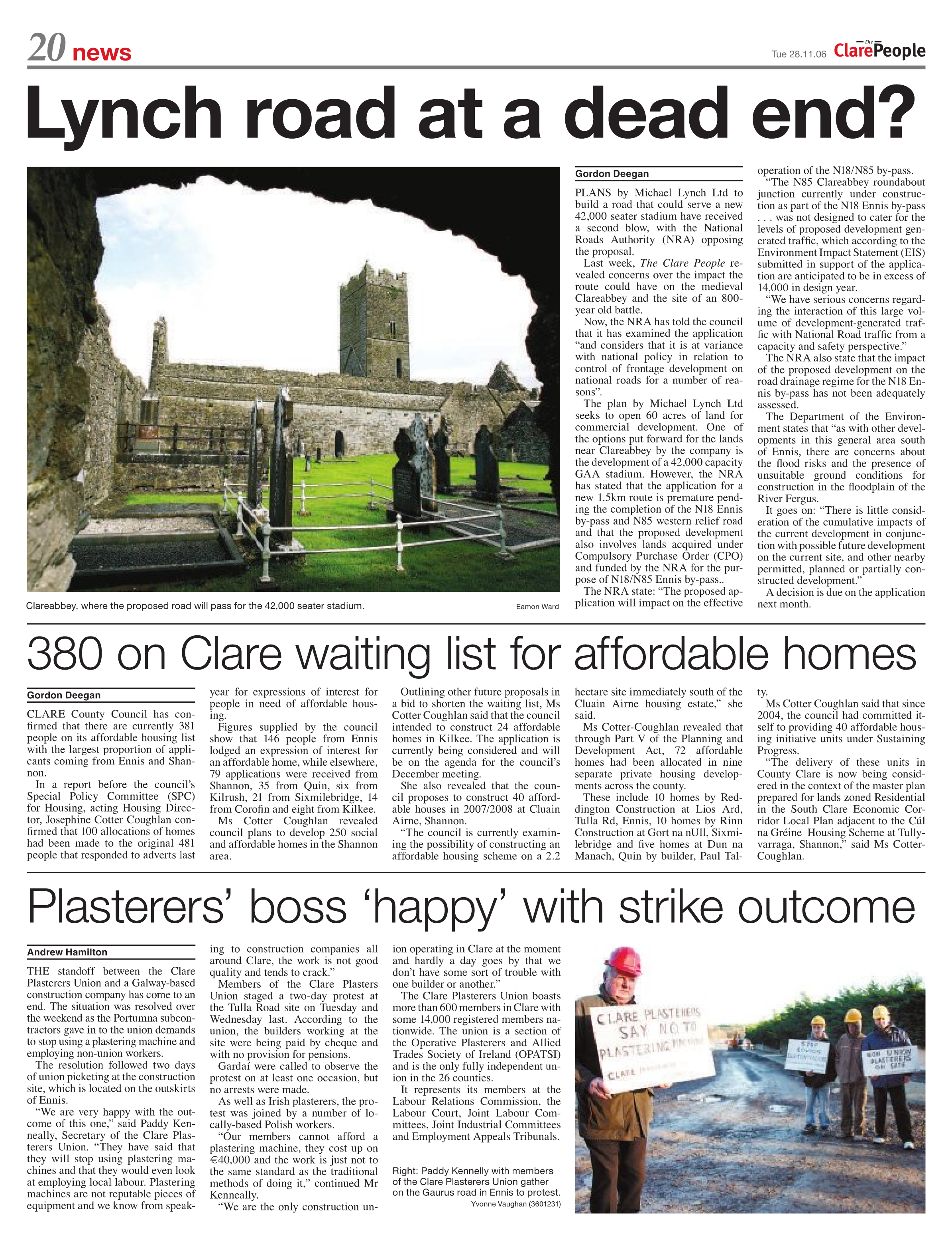
THE standoff between the Clare Plasterers Union and a Galway-based construction company has come to an end. The situation was resolved over the weekend as the Portumna subcontractors gave in to the union demands to stop using a plastering machine and employing non-union workers.
The resolution followed two days of union picketing at the construction site, which is located on the outskirts of Ennis.
“We are very happy with the outcome of this one,” said Paddy Kenneally, Secretary of the Clare Plasterers Union. “They have said that they will stop using plastering machines and that they would even look at employing local labour. Plastering machines are not reputable pieces of equipment and we know from speaking to construction companies all around Clare, the work is not good quality and tends to crack.”
Members of the Clare Plasters Union staged a two-day protest at the Tulla Road site on Tuesday and Wednesday last. According to the union, the builders working at the site were being paid by cheque and with no provision for pensions.
Gardaí were called to observe the protest on at least one occasion, but no arrests were made.
As well as Irish plasterers, the protest was joined by a number of locally-based Polish workers.
“Our members cannot afford a plastering machine, they cost up on €40,000 and the work is just not to the same standard as the traditional methods of doing it,” continued Mr Kenneally.
“We are the only construction union operating in Clare at the moment and hardly a day goes by that we don’t have some sort of trouble with one builder or another.”
The Clare Plasterers Union boasts more than 600 members in Clare with some 14,000 registered members nationwide. The union is a section of the Operative Plasterers and Allied Trades Society of Ireland (OPATSI) and is the only fully independent union in the 26 counties.
It represents its members at the Labour Relations Commission, the Labour Court, Joint Labour Committees, Joint Industrial Committees and Employment Appeals Tribunals.