This article is from page 39 of the 2006-12-19 edition of The Clare People. OCR mistakes are to be expected so download the original SWF or the rendered page 39 JPG
THE Pádraig Nally trial prompted much debate on the use of force by an individual who believes he is under threat. Nally claimed at all times that he was in fear and the jury was asked to decide if he used excessive force. They decided the force used was justified and they acquitted him of manslaughter.
Gardaí in Clare say people are entitled to protect themselves and their property, by lawful means.
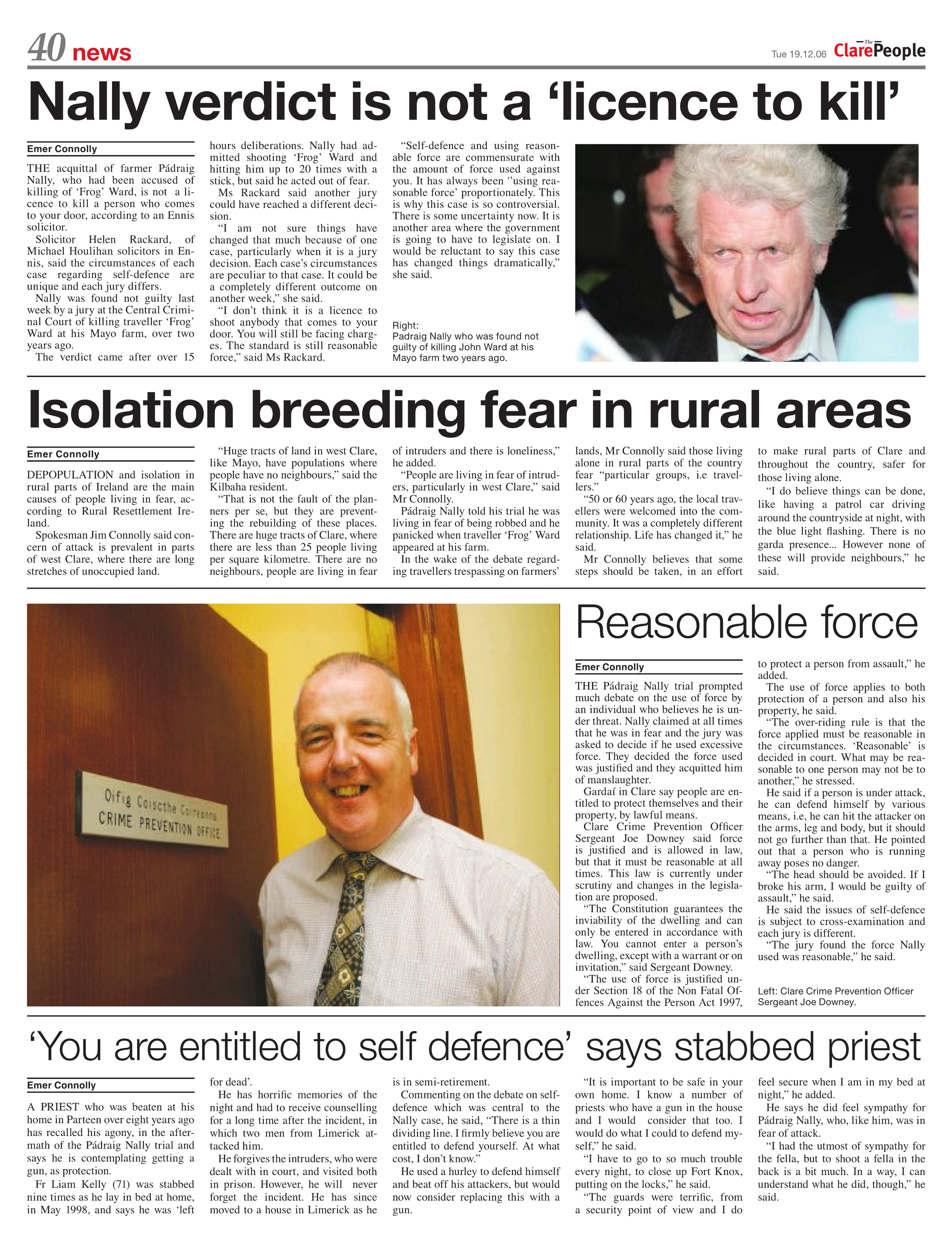
Clare Crime Prevention Officer Sergeant Joe Downey said force is justified and is allowed in law, but that it must be reasonable at all times. This law is currently under scrutiny and changes in the legislation are proposed.
“The Constitution guarantees the inviability of the dwelling and can only be entered in accordance with law. You cannot enter a person’s dwelling, except with a warrant or on invitation,” said Sergeant Downey.
“The use of force is justified under Section 18 of the Non Fatal Offences Against the Person Act 1997, to protect a person from assault,” he added.
The use of force applies to both protection of a person and also his property, he said.
“The over-riding rule is that the force applied must be reasonable in the circumstances. ‘Reasonable’ is decided in court. What may be reasonable to one person may not be to another,” he stressed.
He said if a person is under attack, he can defend himself by various means, i.e, he can hit the attacker on the arms, leg and body, but it should not go further than that. He pointed out that a person who is running away poses no danger.
“The head should be avoided. If I broke his arm, I would be guilty of assault,” he said.
He said the issues of self-defence is subject to cross-examination and each jury is different.
“The jury found the force Nally used was reasonable,” he said.